Singapore · Est. 2026
Singapore
What most visitors never see. Stories behind the landmarks. The Singapore your guidebook forgot to mention.
Explore the StoriesFeatured Story
Marina Bay · Singapore
This is not a park. It is Singapore's answer to a question most cities have not yet thought to ask.
Before you step inside, understand what you are looking at. Gardens by the Bay was not built for leisure. It was built because Singapore asked a difficult question: how do we stay livable in a world that is getting hotter, denser, and less predictable? Every structure you see here is an answer.
Read the Full StoryLatest Stories
Inside Singapore Botanic Gardens lives the story of a woman with no formal training, a man everyone called mad, and a plant that powered the industrial age.
One field. Two cricket clubs. One for Europeans, one for everyone else. The Padang didn't just host events — it organised an entire society.
Seven hundred years of power, faith, military command, and memory — all layered on one small hill in the middle of the city.
Two kilometres of neoclassical columns, a cricket field, and the oldest government building in the country. The Civic District is Singapore's most legible argument made in stone.
Joo Chiat is not simply one neighbourhood. It is a refinement of earlier Katong — layered with Peranakan shophouses, vanished coastline, and a community that never quite blended into the city it outlasted.
Kampong Glam began as a royal quarter and became a merchant city. Bugis Street began as a trading zone and became a legend. Both roads lead to the same truth about how Singapore learned to live with difference.
Before offices and clan halls, Telok Ayer's waterfront held shrines. When migrants arrived by sea, their first act was not commerce. It was gratitude — and the temples they built still stand, facing the sea that is no longer there.
Little India didn't begin as a festival destination. It began as cattle pens, lime kilns, and migrant labour. Everything vivid about it today grew out of something much harder.
A Hindu temple and a mosque stand at the heart of Singapore's most Chinese district. That contradiction isn't a mistake. It's the whole point — and it took a Street of the Dead to explain it.
Tiong Bahru began as cemetery land. What it became — Singapore's first planned public housing estate — changed the idea of what ordinary life could look like, and set the template for every town that followed.
Toa Payoh means exactly what it sounds like: Big Swamp. Before the dragon playground, the library fountain, and the new-town blueprint, this was gambier plantation, contested kampong, and marshland nobody wanted.
Explore by Destination
Singapore
Marina Bay
Singapore
Tanglin & Botanic
Singapore
Civic District
Coming Soon
Bali
Indonesia · 2026
Coming Soon
Bangkok
Thailand · 2026
The Guide Behind the Stories
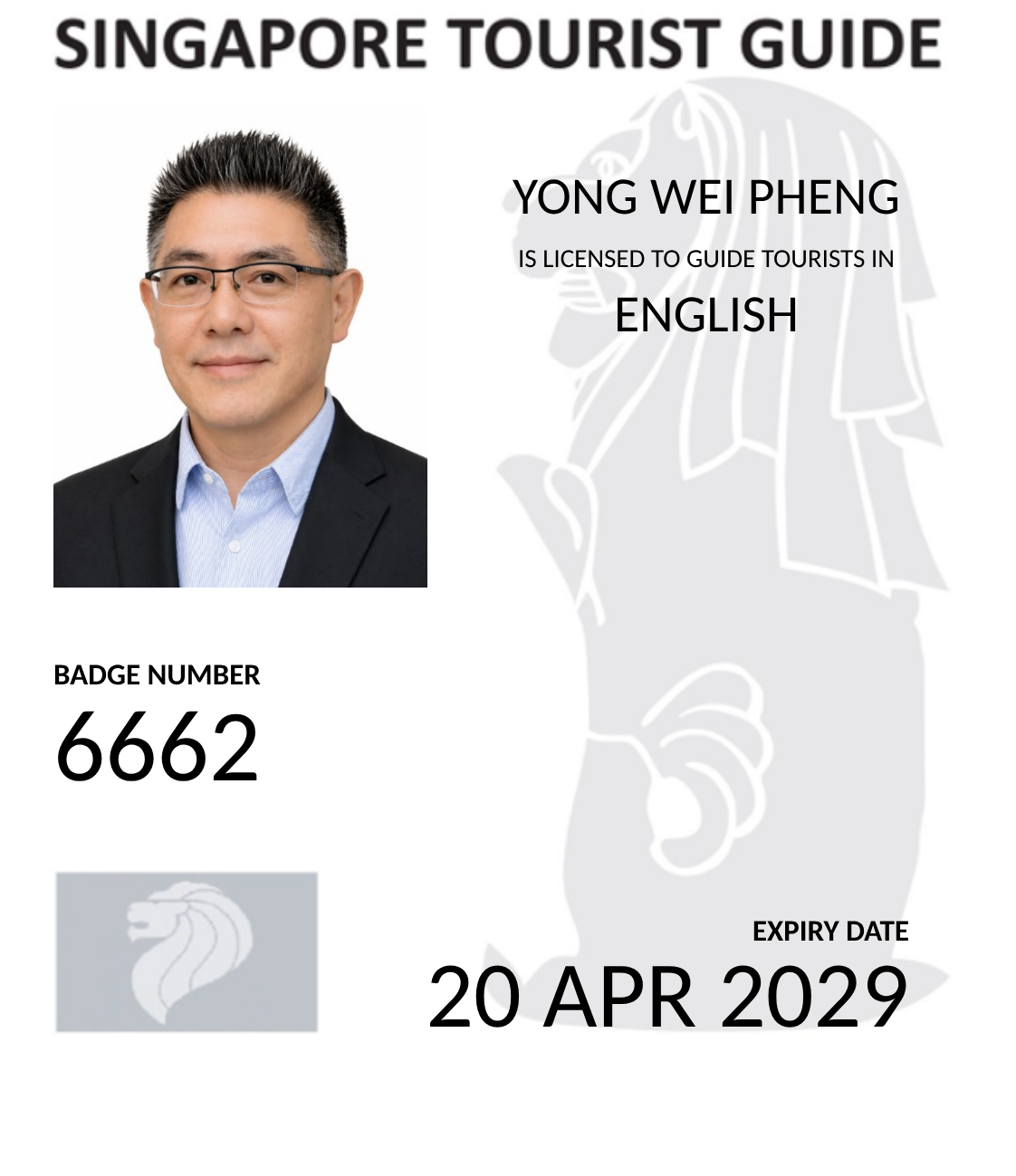
"Every article on this site comes from having stood in that place, walked it slowly, and noticed what most people walk right past. That is what a licensed guide does. That is what this site does."
Verified · STB Licensed
Singapore Tourist Guide